












Buying 7 min read
How to read a condition report without being lied to
Crazing, restoration, refinish, service history, original dial — the six words that decide what an object is actually worth, and what each of them is hiding when it is used loosely.
A condition report is not a description of an object. It is a description of everything that is wrong with an object, written by somebody who wants you to bid on it. That tension is the whole reason the vocabulary exists, and the whole reason it gets abused.
Here is what the words mean when we use them, and what they usually mean when they are used loosely elsewhere.
Crazing is not damage
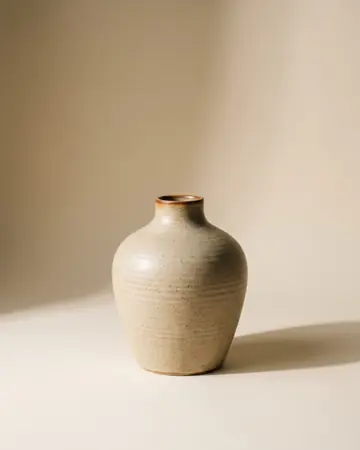
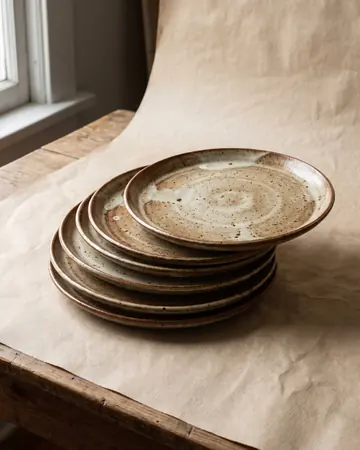
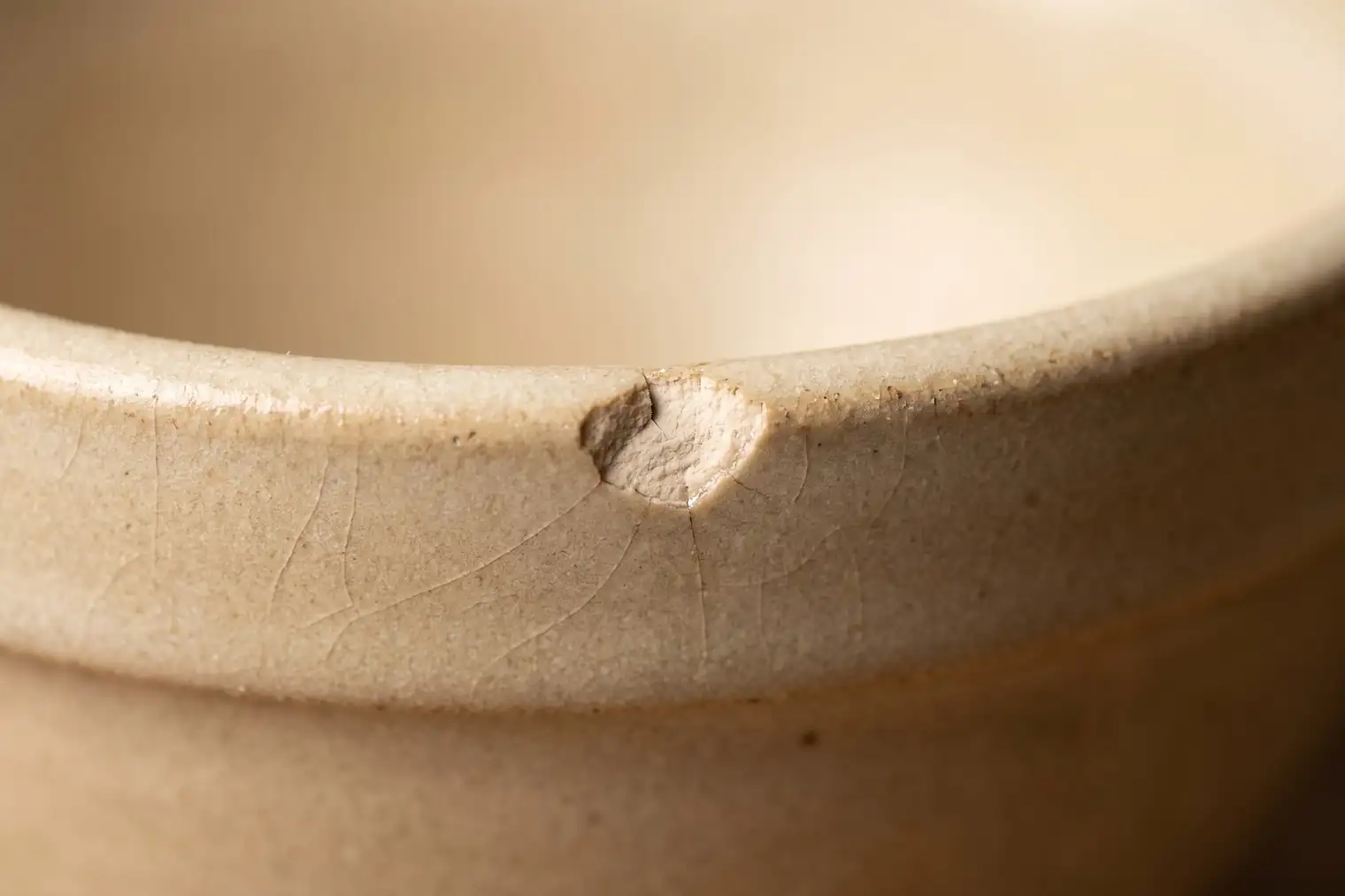
Crazing is a fine network of cracks in the glaze, not in the body of the pot. It happens when the glaze and the clay shrink at different rates on cooling. On most studio pottery it is a characteristic of the glaze rather than a fault, and it was often there the day the piece came out of the kiln.
What matters is whether the crazing has stained. Stained crazing means liquid has sat in it, which means the body is porous, which means it may not be watertight. We say so when it is stained. "Crazing" on its own, on this site, means clean crazing.
Restoration and refinish are different words
A restoration puts back something that was lost — a rewoven corner, a re-brazed joint, a replaced leg. A refinish removes something that was there — the original surface. Both are legitimate. Both change what you are buying.
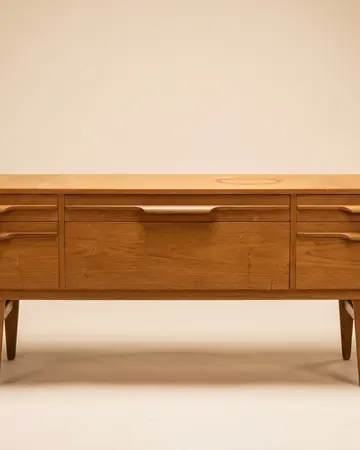
A refinished mid-century case piece is worth meaningfully less than the same piece with its original surface, cleaned and oiled. Any listing that says "restored" without saying which of those two happened is doing it on purpose.
Service history is the only thing that matters on a watch
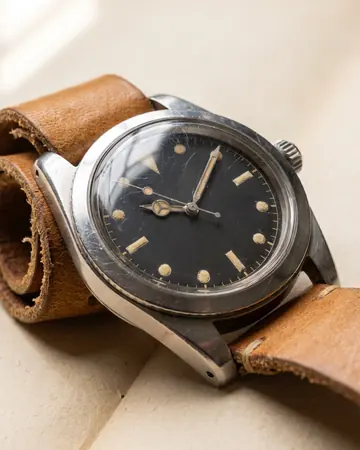
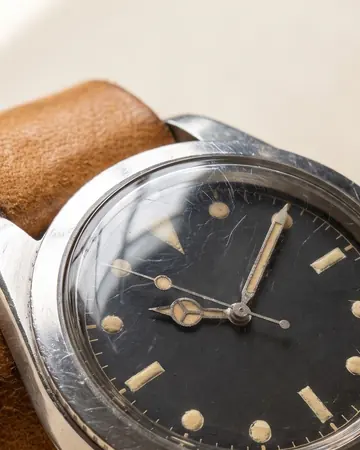
Three lines: when was it last serviced, what was replaced, and is the dial original. A watch with a recent service, an honest parts list and an original dial is a watch you can buy at distance. A watch with none of those is a lottery ticket with a strap.
A refinished dial is not a scandal. An undisclosed refinished dial is.
The photograph is the report
The single most useful thing an auction can do is photograph the damage at the same magnification as the object, in the same light, and put a number on it. Four millimetres is a specific claim. "Minor chip" is not.
That is why every lot on this site carries numbered markers pinned to the actual coordinates of the actual fault. You should be able to see it before you decide whether you mind it.
More from the journal
Also worth reading
Bidding 5 min
Why our lots refuse to close on time
Anti-sniping, explained in plain words: what a soft close does, why we set ours at three minutes, and why a lot that keeps extending is working correctly rather than failing.
Shipping 6 min
Packing a chipped pot so it does not become a broken pot
Everything we have learned about getting fragile objects across the country intact, including the two mistakes that account for most of the breakages we have seen.
Selling 5 min
What "no reserve" really costs the seller
Most of our lots carry no reserve. Here is the honest arithmetic behind that, from both sides of the transaction.